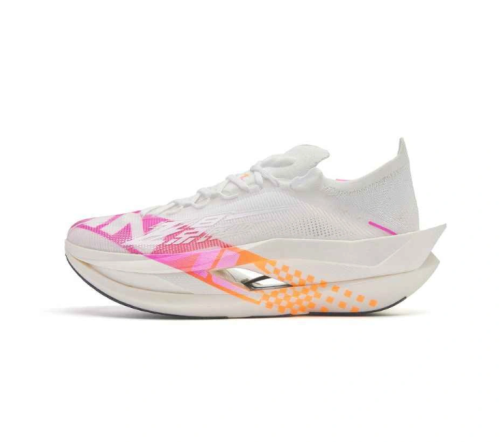
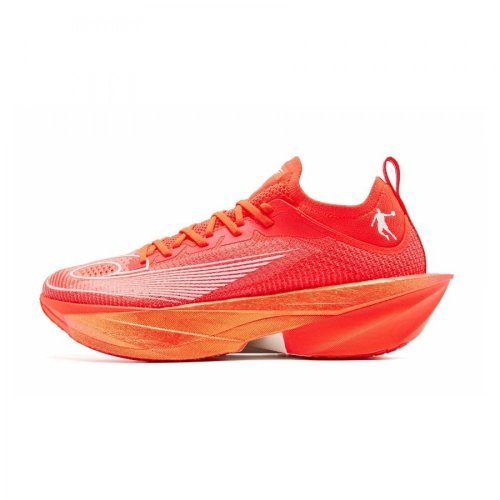
Rocket X Trail
- Weight
- 261g
- Drop
- 6mm
- Heel / Forefoot
- 42/36mm
What kind of runner are you?Pick one to see how this shoe rates for you
We would not recommend this as a first trail shoe. The carbon plate and 42mm stack deliver efficient propulsion, but the plate's stiffness and the high platform make it hard to control for someone whose balance and ankle stability are still developing, and technical sections become harder to hold a rhythm on. If you already have some trail experience and want to try a plated shoe, test it on familiar, gentle trails over short distances (5-8 km) and adapt gradually to how the plate responds. Do not rush to increase pace at first: let your body learn to hold a midfoot to forefoot landing on the plate. If you are completely new to trails, build experience in a gentler, unplated trail shoe before upgrading.
If you only run trails occasionally and mostly hike, this is not the most suitable choice. The plate's rigidity is hard to exploit at low speed and instead makes every step feel firm, tiring the soles on long hikes, and the 42mm stack reduces ground feedback on rock-and-root terrain, making it harder to judge where to place your foot. If you are already used to trail running and schedule one or two mountain sessions a week, the shoe offers a clear speed advantage on familiar routes, especially downhill and on smooth dirt. For casual use, keep it within 10 km and on routes without high technical difficulty. If your main purpose is easy trail running and hiking, a softer, unplated trail shoe will be more comfortable.
In trail ultras and long distance trail races, the Rocket X Trail's carbon plate design genuinely earns its keep. The double PEBA and carbon sandwich maintains energy return over long distances, reducing late-race muscle fatigue, the 42mm stack provides necessary protection in events beyond 50 km, and the 6mm drop lets a midfoot to forefoot technique hold up under fatigue. At around 261g the weight advantage is clear in long trail races, easing the cost of lifting the legs. It does not suit every trail race, however: on highly technical, rocky or heavily climbing routes the plate can actually reduce agility. We would position it for highly runnable races dominated by dirt and gravel, such as the trail marathons and ultras common in Europe and North America. If an event includes large technical sections, alternate with a traditional trail shoe. For a standard road marathon it is not appropriate: use a road carbon racer instead.
Speed is exactly where this shoe belongs. The double PEBA and carbon sandwich delivers strong propulsion at trail paces of 4:00-4:30/km, the plate gives a clear rebound at push-off, and the 42mm stack retains protection on fast descents so rocks and roots are less of a worry. At around 261g the weight does not hold you back when accelerating uphill. On highly runnable trails such as fire roads, dirt and gravel, it performs close to a road carbon racer and sustains efficiency over long distances. On technical sections that demand lateral movement, obstacle hopping or sharp turns, however, the plate's stiffness limits foot agility, so slow down and prioritise technique. If you want to chase results in trail racing, this is one of the few genuinely effective options available.
Specs
- Midsole
- Dual-layer PEBA foam sandwiching a carbon fibre plate, trail racing oriented
- Plate
- Carbon fibre plate (between two PEBA layers)
- Upper
- Lightweight breathable trail upper
- Outsole
- Lugged trail outsole, grip and mud clearance
- Terrain
- Trail
- Cushioning zone
- Even
- Version
- Unisex
Compared with other “Trail Running” shoes
68 similar shoes in our database. The dot is this shoe; the line is the average.
Ride feel
「Bouncy, Propulsive, Trail-ready」
Who this shoe fits
Reviews
Like 0
- No comments yet — be the first.
Dislike 0
- No comments yet — be the first.
RunRepeat 2026-10-08 評測;42/36mm、261g;HOKA 越野碳板競速鞋,雙層 PEBA + 碳板提供優異能量回饋。美金定價 US$250(hoka.com 被 Cloudflare 阻擋,台幣為換算值)。
Similar shoes
Tags show the difference from this shoe