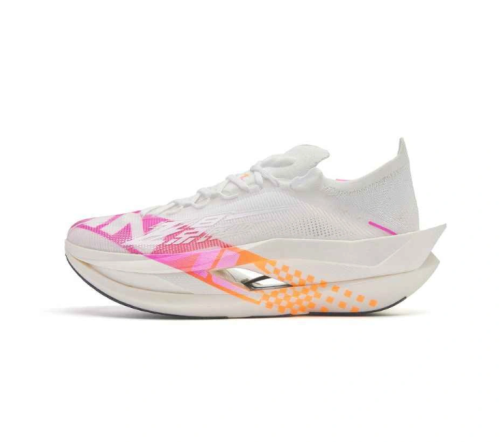
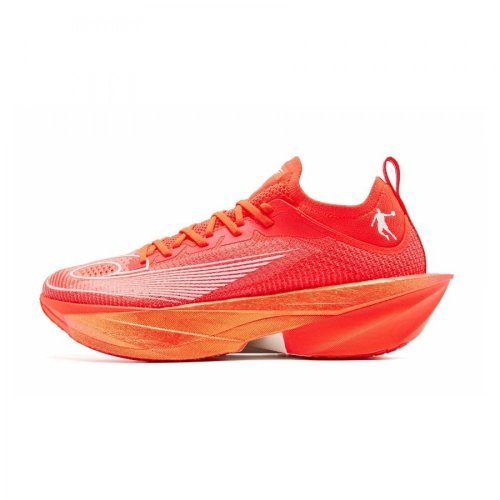
AERO Elite
- Weight
- 167g
- Drop
- 4mm
- Heel / Forefoot
- 40/36mm
What kind of runner are you?Pick one to see how this shoe rates for you
We would not recommend this as a beginner's first racing shoe. The extremely low 4mm drop and the firm Quantum Plate demand considerable calf and plantar strength, and newcomers without that base risk overloading the Achilles and calves. The ultralight 167g build is tempting, but stability and tolerance are both lower than on a standard trainer, raising injury risk while technique is still developing. If you have been running for a while and want to try a plated shoe for the first time, test it on familiar flat routes over short distances (3-5 km) at an easy pace to learn the forefoot landing and how the plate responds, and do not jump straight into racing or long distances. Beginners are better off building mileage and strength first before considering this kind of racer.
If you only run occasionally, this shoe is not suited to daily use. The extremely low 4mm drop forces a midfoot to forefoot landing, which places considerable load on the calves and Achilles for people used to heel striking who run infrequently, often producing discomfort after a few outings. The ultralight, plated setup lacks a sense of stability at slow speeds, and easy long runs are not what it was designed for. If you want it as a race-day shoe for an occasional road event, do at least three or four progressive adaptation runs beforehand so your calves get used to generating force at a low drop. Keep a well-cushioned 8-10mm drop trainer for daily sessions and reserve this one for race day and speed work.
This shoe is purpose-built for marathon racing, and that is where it belongs. The ultralight 167g reduces the cost of lifting the legs over a full 42 km, so fatigue accumulates less in the closing stages; the 4mm drop paired with the Quantum Plate maximises propulsive efficiency for midfoot and forefoot strikers, suiting runners who can hold a 4:00-4:30/km marathon pace. The 40mm/36mm stack provides ample cushioning for a racer and retains protection over long distances. The Quantum Plate's progressive spring is gentler than a full carbon plate, putting less shock through the ankle and reducing the risk of excessive tightness over a long race. Treat it as a dedicated race-day and key-session shoe; use a well-cushioned trainer for everyday long runs so the feet get recovery. If your goal is a marathon PB and you already have the strength base, it is worth trying.
This is exactly what it was designed for. The ultralight 167g makes it easy to lift cadence, and the 4mm drop with the Quantum Plate delivers direct, progressive propulsion in the 3:30-4:15/km range without the stiffness of a full carbon plate at slower paces. The 40mm stack keeps enough protection at speed, holding up through long intervals such as 8 x 1 km. The spider-web structure of the Quantum Plate flexes more than a full carbon plate in turns and pace changes, putting less stress on the ankle. If your training includes plenty of short intervals (400-800 m) and tempo runs, it can handle them; be aware that the very low drop increases calf load, so increase frequency gradually and switch to a larger-drop trainer on recovery days to avoid accumulating excessive Achilles strain.
Specs
- Midsole
- HYPER BURST PRO midsole with Quantum Plate carbon fibre-reinforced nylon plate
- Plate
- Carbon fibre-reinforced nylon plate (Quantum Plate, spider-web structure)
- Upper
- Ultralight breathable racing upper
- Outsole
- Lightweight rubber outsole
- Terrain
- Asphalt
- Cushioning zone
- Forefoot Biased
- Version
- Unisex
Compared with other “Full Marathon” shoes
149 similar shoes in our database. The dot is this shoe; the line is the average.
Ride feel
「Firm-bouncy, Fast, Lightweight」
Who this shoe fits
Reviews
Like 0
- No comments yet — be the first.
Dislike 0
- No comments yet — be the first.
RunRepeat 2026-11-19 評測;40/36mm、167g(極輕量);Skechers 頂級碳板競速鞋,4mm 低落差、前掌推進取向。美金定價 US$225(2 026/10/1 上市);台灣售價查無,台幣為換算值。
Similar shoes
Tags show the difference from this shoe