Running Leg Fold: Lift the Lower Leg, Not the Thigh
Training Guides
2026-11-22 178 views

Lift the lower leg, not the whole thigh
No leg fold and heavy legs? Switch to compare the two approaches.
How much fold is right?
Drag the slider to change how much the swing leg’s knee bends.
Angles are illustrative, to show the difference between a long lever and a forced kick; they are not recommended values.
Break the swing into three phases
Switch phases to see how the swing leg (red) moves.
The figures are simplified stick runners showing only the relative leg position in each phase.
Four points worth adding
The idea has a sound biomechanical basis, with a few caveats:
- Folding isn’t kicking your buttIt isn’t deliberately kicking the heel to the butt; it’s the knee bend that occurs naturally as the leg swings.
- Shorter lever, easier swingFolding the lower leg shortens the swinging leg’s lever and helps reduce the moment of inertia needed to swing it.
- Fold varies with speed and runnerHow much you fold depends on speed, cadence, strength and running form; not every speed needs the same fold.
- Don’t force itDon’t flex hard just to chase more fold — it may add load to the hamstrings.
Different speeds, different fold
The speed-to-angle relationship is illustrative; cadence, strength and form differ between runners.
Active fold, or natural result?
This is the most interesting question the video raises. The two ideas look similar but may lead to different training.
- Helps build the feel of “tucking the leg”
- Overdone, it turns into forced flexing and butt kicks
- Practice focuses on a relaxed push-off and hip movement
- The amount of fold changes with speed on its own
This is an open question for further thought; there is no single agreed answer.
The practical takeaway
You don’t need a high kick on every step — just keep the legs light. Practice cue:
Relaxed push-off
Natural recovery
Smooth swing
Tap each one, then head out.
This page combines a summary of the video with additional biomechanical observations and open questions; the latter are analysis, not the video’s words. Reference video: YouTube Short
After toe-off, let the lower leg recover naturally and keep your legs light.
Avoid over-lifting the thigh or forcing an exaggerated movement.🏁 Finished!
Added to your knowledge mileage. Where to next?
Next stop
 Read
Running Arm Swing: Pull the Arm Back, Don’t Swing It Down
Sore shoulders and heavy legs? Some runners swing their arms downward, tensing the shoulders and making it hard for the…
 Read
Beginner Running? Just Keep Your Mouth Shut!
Many people ask when they start running: "How fast should I go?" or "What should my heart rate be?" Actually, if you’re…
 Read
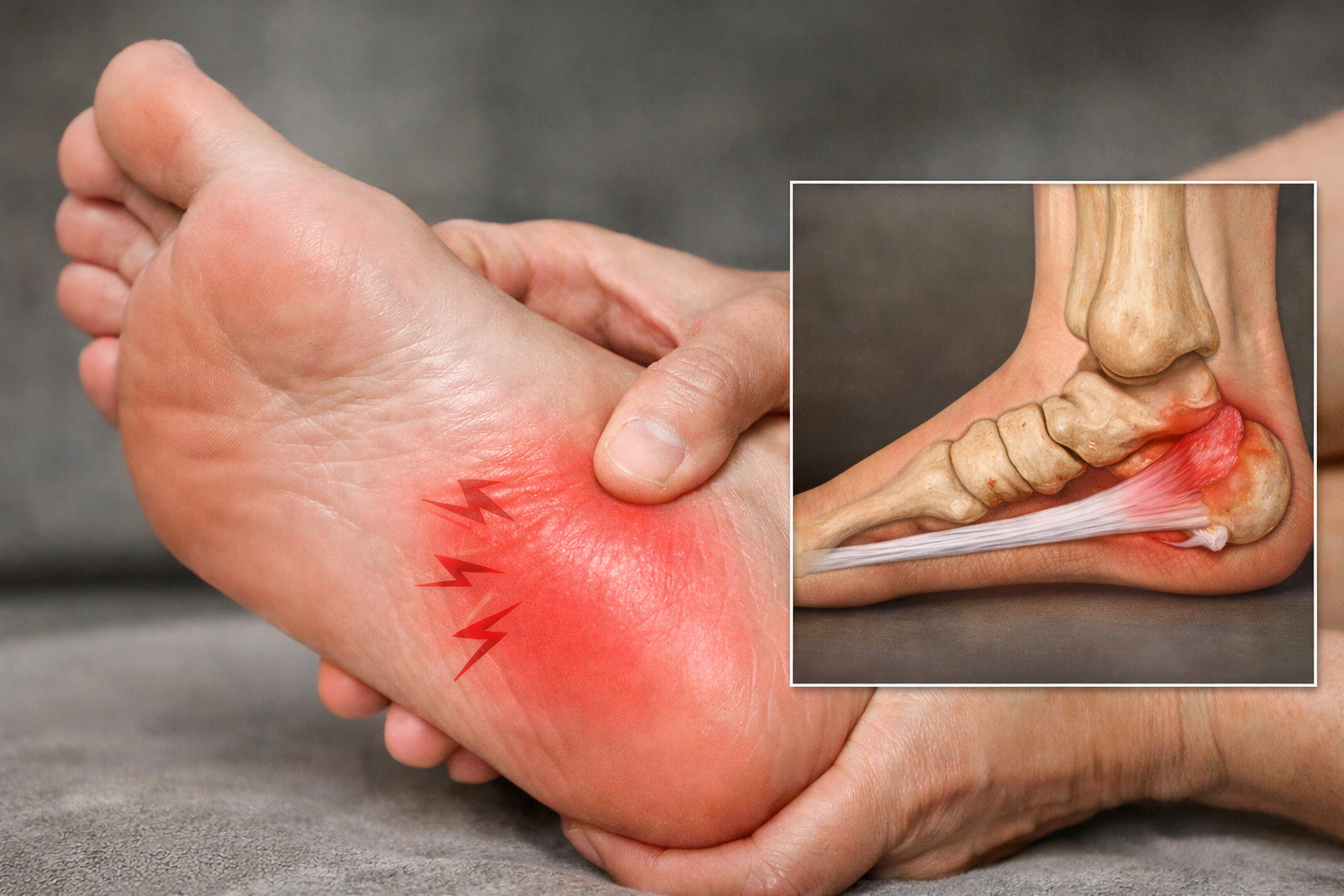
Plantar fasciitis
The plantar fascia is a ligament stretching from the heel to the forefoot, supporting the arch and absorbing impact dur…