Hip flexor strain
Common running injury terms
431 views
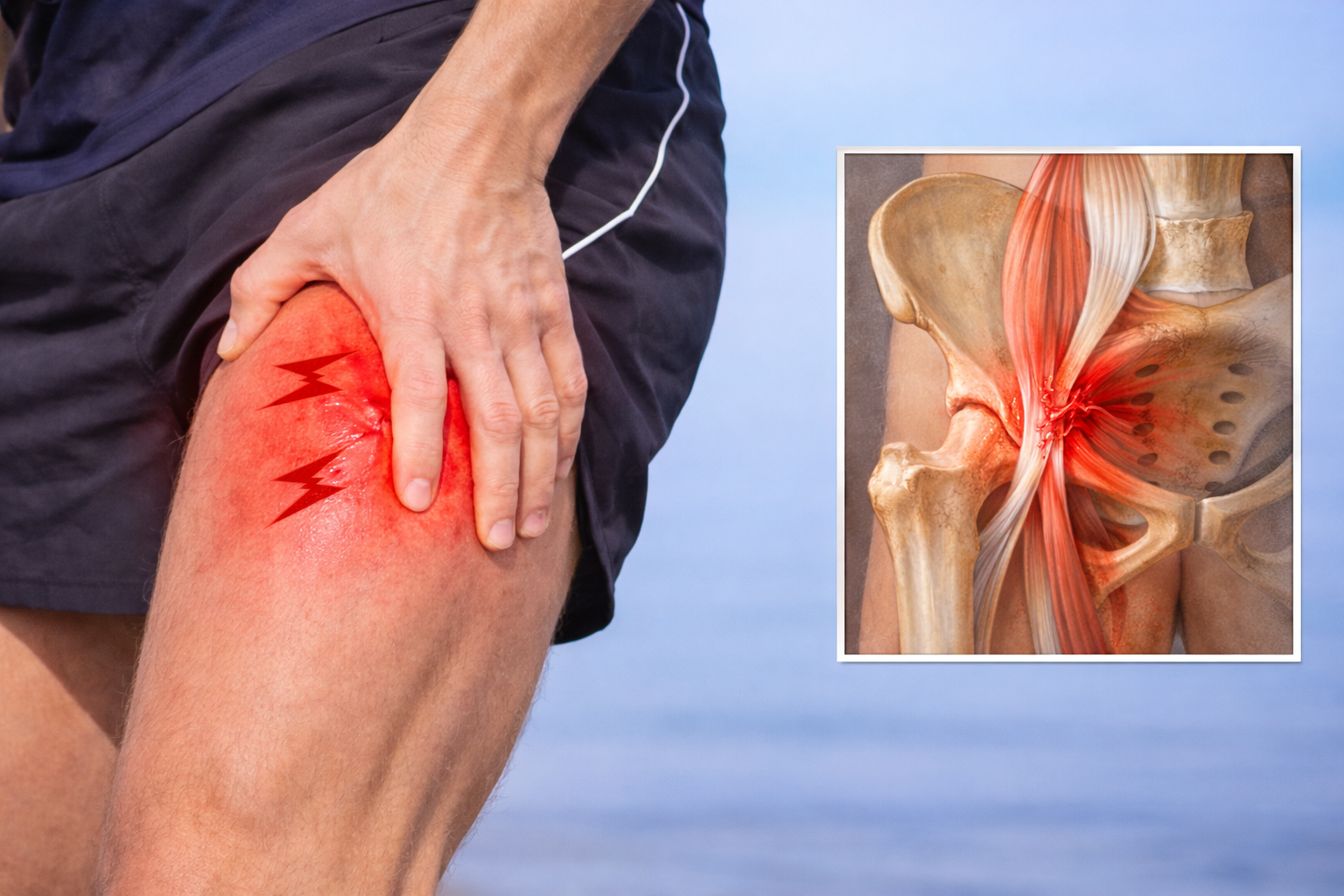
1. Origin of Hip Flexor Strain
The hip flexor muscles (mainly including the iliopsoas) are responsible for lifting the thigh forward, playing a key role in leg swing and stride frequency during running. When speed suddenly increases, stride length becomes too large, uphill running is excessive, or training begins after prolonged sitting without proper warm‑up, these muscles are repeatedly stretched and contracted beyond their capacity, leading to micro‑tears and strain. Most cases result from insufficient core and pelvic stability combined with rapid changes in intensity.
2. Warning Signs: How Does It Appear?
-
Pulling or stabbing pain in the groin or front of the hip
-
More obvious when lifting the leg, striding, or accelerating
-
Local tenderness and tightness when pressing the front hip
-
Mild cases allow running but feel awkward; severe cases make walking and leg lifting uncomfortable
-
Pain with clear movement limitation usually indicates a more serious strain.
3. Prevention Before Exercise Key points: Warm‑up, Stability, Gradual progression.
-
Dynamic warm‑up: High knees, lunges, and hip mobility drills before running to activate hip flexors.
-
Strengthen core & glutes: Improve pelvic stability to reduce over‑compensation by hip flexors.
-
Control intensity changes: Increase speed, incline, and stride length gradually; avoid high intensity right after sitting or when fatigued.
Summary: Hip flexor strain isn’t about weakness—it’s about being “forced to sprint before ready.” Warm up first, then accelerate, and the risk drops significantly.